Current Project
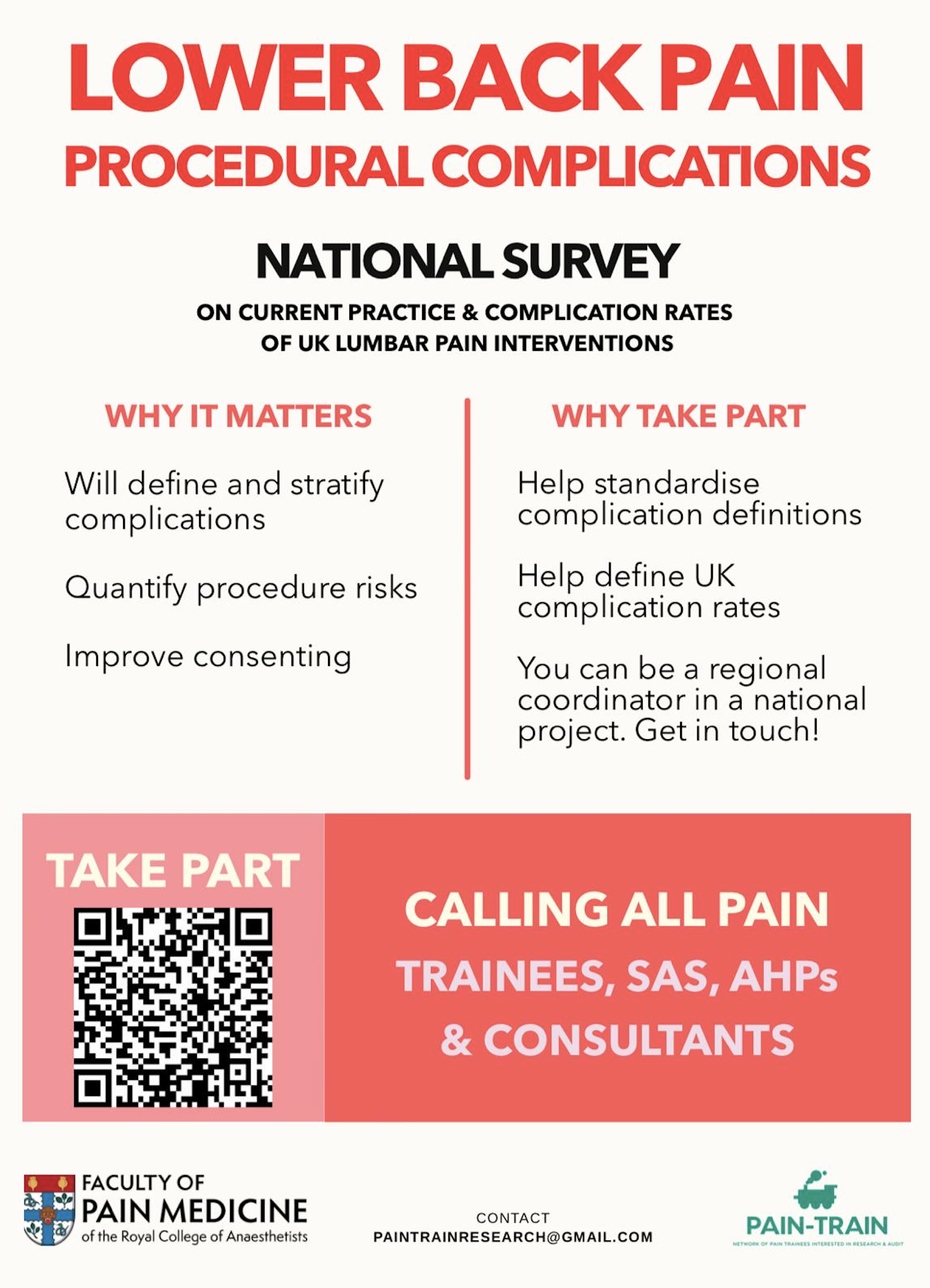
Evidence suggests lumbar pain interventions are widely performed across the UK, yet high-quality national data on true complication rates and definitions remain limited.
There is currently no standardised UK framework to stratify complications or quantify procedural risk across common lumbar interventions. As a result, consenting practice, risk communication, and governance processes may vary significantly between centres.
Despite increasing procedural volume and complexity, we lack contemporary national data to clearly define complication rates and benchmark current practice.
Since variations in technique, setting, and reporting are inevitable, there is an urgent need to systematically capture real-world safety data.
This project — a collaboration between Paintrain and the Faculty of Pain Medicine — aims to:
The upcoming national survey will document both organisational practice and individual clinician experience, creating the foundation for future guidance and standardisation.
Opportunities to contribute and act as regional leads will be available.
Past Project
Evidence suggests that use of intrathecal hydrophilic opioids reduces postoperative pain scores & opioid consumption in the first 24 hours. There is however a lack of guidance regarding choice & dosage of various opioids for non-obstetric patients
Since 2019 there has been a shortage of diamoprhine in the UK. The obstetric Anaesthesia Association issued a commentary based on the nice guidelines for caesarean section in 2021. The recommendations include the use of alternative opioids for intrathecal use as well as hourly monitoring of patients for respiratory depression for 24 hours following administration.
Despite diamorphine being the opioid of choic for non-obstetric cases there exists no similar recommendations to guide this change in practice.
This project aims to describe the organisational response to the national diamorphine shortage in the management of non-obstetric peri-operative pain whilst simultaneously documenting individual changes to clinical practice as a result of the shortage.

Past Project
GABACUTE was PainTrains first national project aiming to identify how anaesthetists are using gabapentin and pregablin periopertively & their reasons for doing so.
The project completed in 2019 and analysis is underway - we intend to submit the project for publication soon.
For any queries about the GABACUTE project please get in touch